Why Your Oven’s Temperature Lag is Killing Your Pastries
If you’ve ever pulled a tray of pastries out of the oven only to find the edges burnt while the middle is still doughy, you know the frustration. High-end baking isn’t just about hitting a number on a dial. It’s about how fast your oven can react when that number changes. Most ovens have a “lag” problem. You turn the heat off, but the coils stay glowing red for minutes, continuing to cook your food long after you wanted them to stop. It’s like trying to drive a car with a steering wheel that takes ten seconds to respond. We decided to fix that.
Instant Heat, Instant Stop
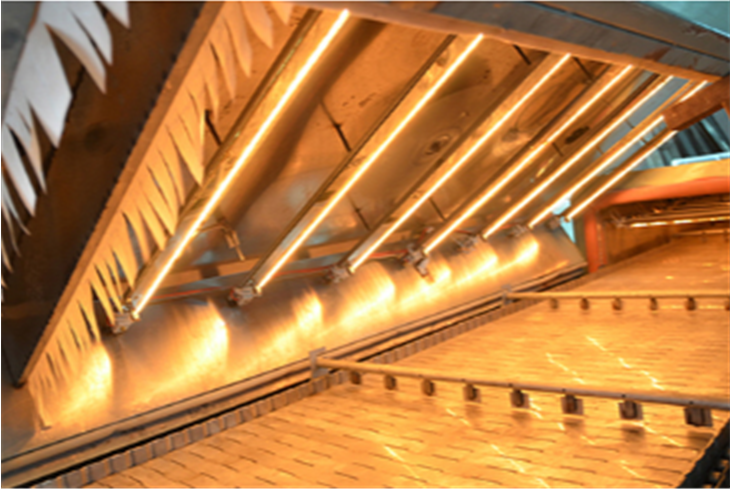
Instead of those old-school coils that take forever to warm up and cool down, we use short-wave infrared technology. Think of it like a light switch. We use a halogen-filled quartz envelope that lets the filament hit its target temperature almost the second you flip the switch. No waiting. No guessing. This lets you use “step-control.” You can pulse the power in tiny bursts to keep your temperature exactly where it needs to be. When the controller tells the heat to stop, it actually stops.**No overshoot. No ruined edges.**Just a perfect bake.
The Nitty-Gritty on the Hardware
These tubes are designed to slide right into your industrial convection units. We spent a lot of time getting the wattage-to-length ratio just right so the heat fits your oven’s footprint perfectly. We also picked a specific type of quartz glass. Why? Because it lets the infrared energy pass straight through to the food rather than wasting it by heating up the oven walls. Swapping them out is easy since we use standard high-temp connectors. But here is a pro tip: because these heaters cycle on and off so quickly, they can chew through mechanical relays. If you’re pulsing these every few seconds,do yourself a favor and switch to solid-state relays (SSRs). Your equipment will thank you.
A Few Things to Keep in Mind
Adding these to your setup basically turns a standard oven into a precision tool. You can flash-sear one minute and slowly dehydrate the next just by tweaking the power supply. But, there’s a catch. Quartz is fragile. These aren’t something you can just toss around or bang into place. One hard knock or a loose bracket can lead to a crack. And for heaven’s sake,wear gloves when you handle them. The oils from your skin create hot spots on the glass, which will kill the lamp way faster than it should die.