

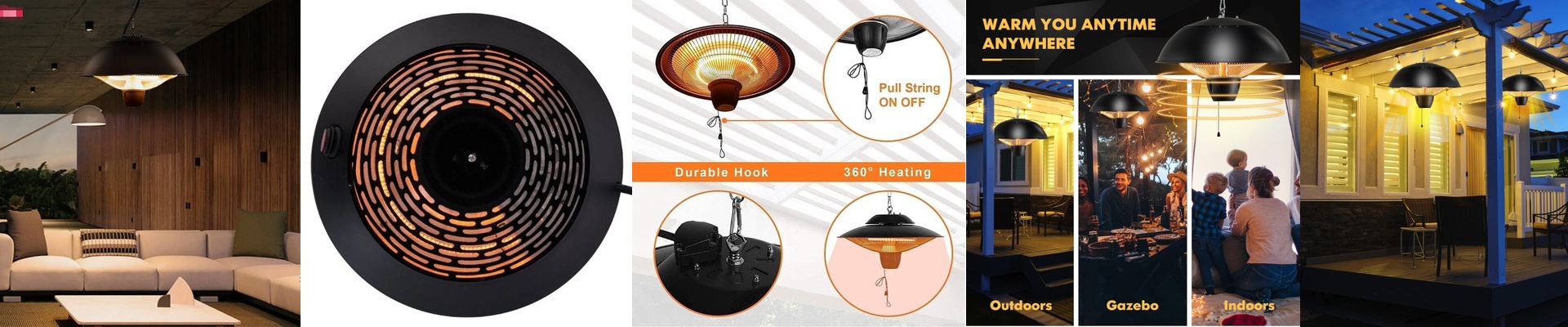
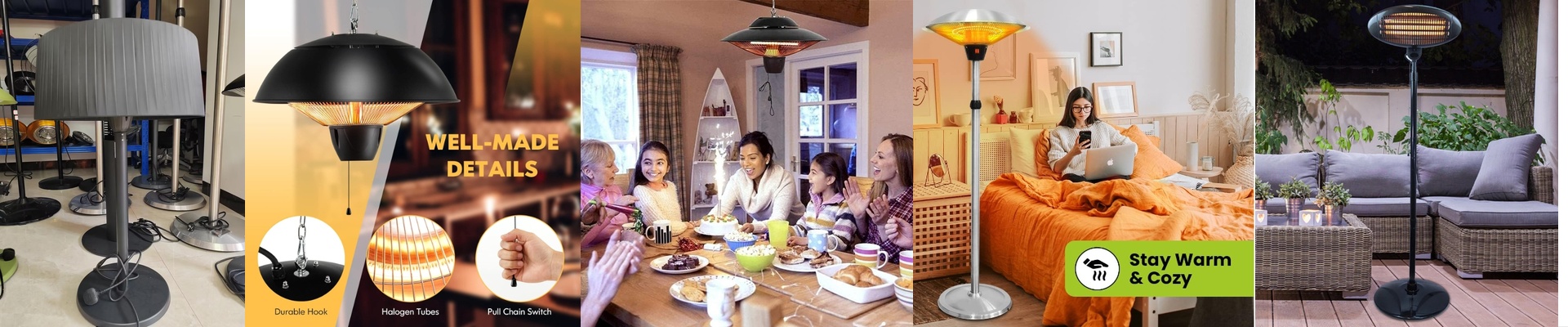
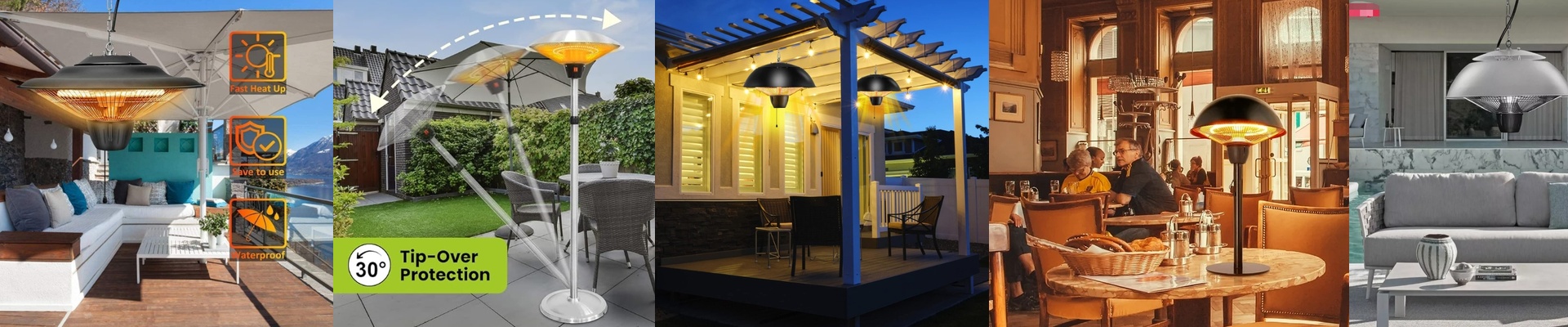
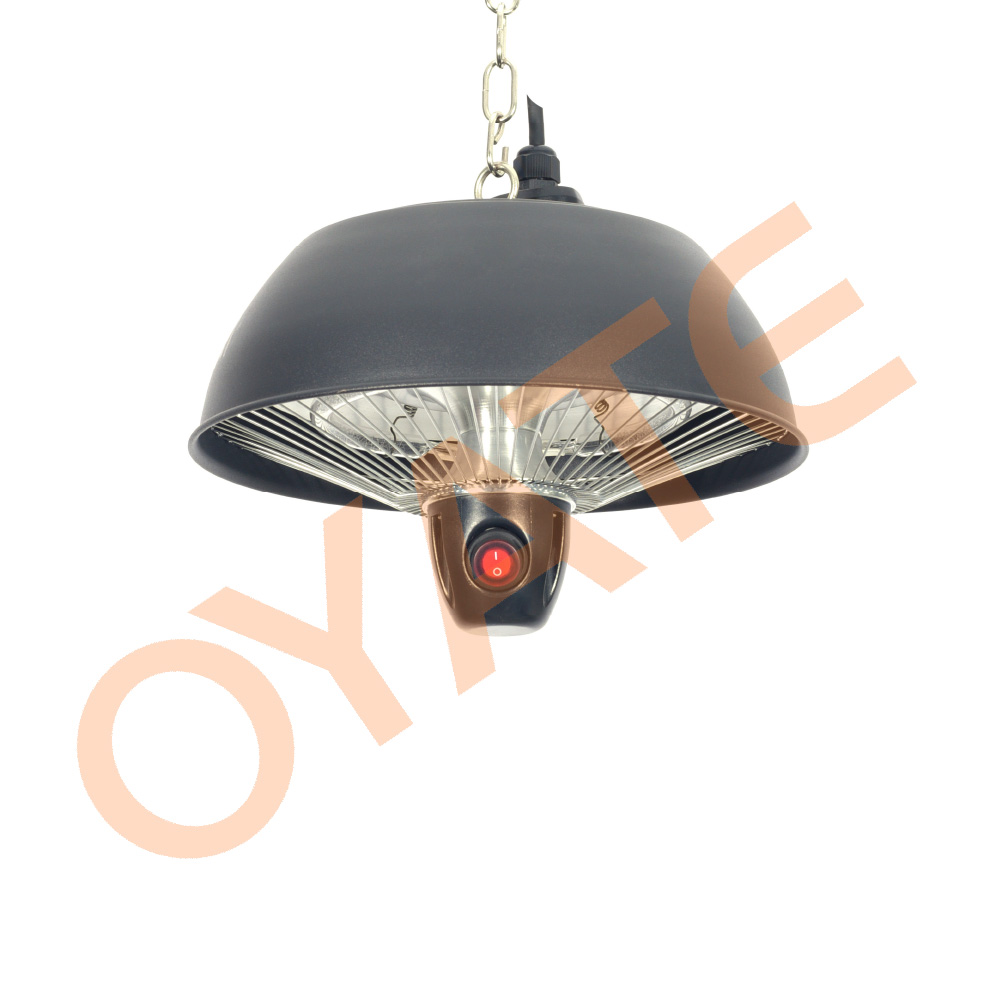
I’ve spent enough time on job sites and in living rooms to see the same pattern play out across Europe: people want heat that shows up the moment they need it, feels natural, and slips into the space without making the air feel like paper. When the warmth lags, the patio evenings get cut short, and the living room still feels drafty even with the thermostat turned up. So we built a solid infrared heater around how people actually live.
What matters under the hood
We went with a carbon fiber element that delivers radiant heat straight to people and surfaces, not to the air around them. That means immediate comfort—you feel it within seconds of flipping the switch. It runs off a standard 230V outlet and is tuned for steady, even output. No noisy fan. No blast of hot air. On the safety side, it’s got tip-over protection and a protective grille, and the housing stays cool to the touch even after hours of runtime.
Why this fits the way homes move
Modern heating has to be flexible. The evening often starts outside on the patio, then drifts inside as the night cools off. With this infrared heater, you get outdoor heating that keeps the conversation going, then moves indoors without turning the room into a stuffy box. Because the warmth is aimed where you actually use it, you’re not wasting energy on empty corners. That focused approach lines up with real routines.
The practical details—placement and use
Radiant heat works best when there’s a clear line of sight to the people in the room, so placement matters. Think of it as a warm “spotlight.” Put it at a comfortable distance and aim it where you sit. The unit is built for everyday use, but it’s meant as a supplemental heat source. It pairs well with your main heating system—it wasn’t designed to replace it.