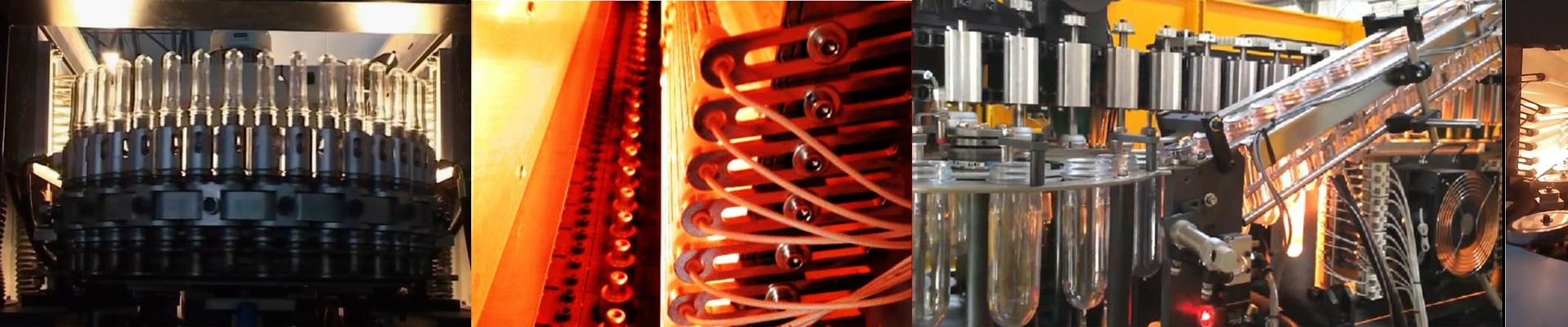
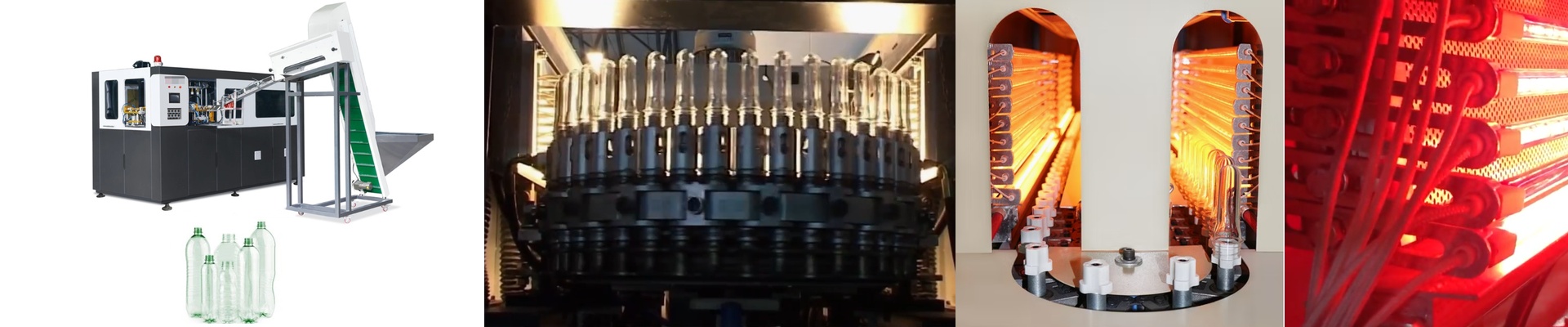
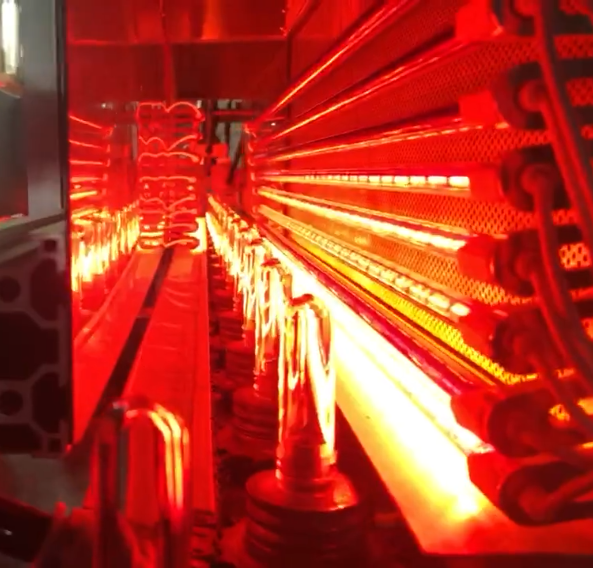
Out on the floor, a blow molder is only as consistent as the heating tunnel feeding it. Underheated preforms show up as white stress lines. Overheated ones collapse right at the neck. When the IR lamps aren’t pulling their weight, the whole line starts chasing temperature instead of running. We make Made in China IR lamps for PET preform lines that drop in as a direct replacement for OEM heating, with 1:1 parameter matching. The point is simple: keep cycle time where it belongs and keep bottle quality stable. Here is the technical part. We build the emitter around short-wave infrared halogen technology. It gives you fast response and tight control over the spectrum, which is exactly what the heating tunnel needs. Quartz tubes are rated 1,000–3,000 W, available in 220 V or 380 V as required, and use standard R7s connectors so swap-in is quick. Filament geometry and reflector spacing are tuned to the tunnel width and the preform wall thickness, so you get even heating without hot bands. Output holds within ±2% across the lamp life, and we’ve seen units run 5,000+ hours with less than 5% drop. Why does this matter on a stretch blow molding line? Because the only thing that matters is getting the preform to a repeatable temperature before it hits the stretch. Our lamps hit setpoint in seconds, cut warm-up time, and keep the tunnel profile stable, so the blow station sees consistent material flow. That shows up where it counts: fewer pinholes, better topload, and less scrap. Energy use comes down because the emitter heats on demand and holds temperature without big cycling. Downtime drops too—lamps swap in minutes, and the driver sees no drift. A few practical notes. Installation is straightforward, but reflector alignment and airflow around the quartz tube have to match your machine’s ducting. If they don’t, you’ll get shadows in the heat profile. Match voltage and connector, then calibrate the power curve to the preform grade you’re running. If your line is 24/7, treat these like any halogen IR: plan replacements around scheduled stops. They run hot, and a planned spare keeps you from chasing failures on the line.