
On the blow molding line, preform temperature is the tightrope. Too cold, and the bottle splits at the shoulder. Too hot, and you kill the PET molecular orientation—barrier performance goes with it. When the heating tunnel can’t hold setpoint, you don’t need a sales pitch. You need heat that repeats.
What actually matters under the hood
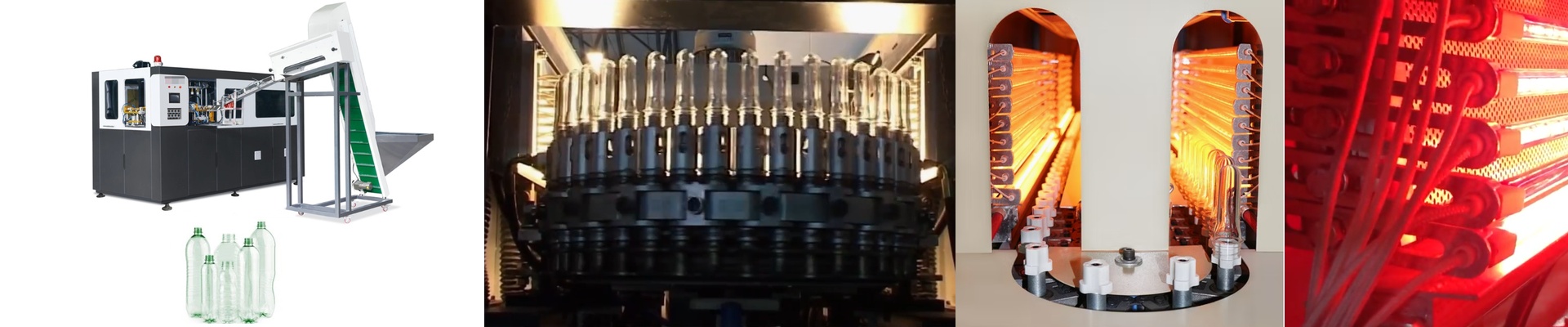
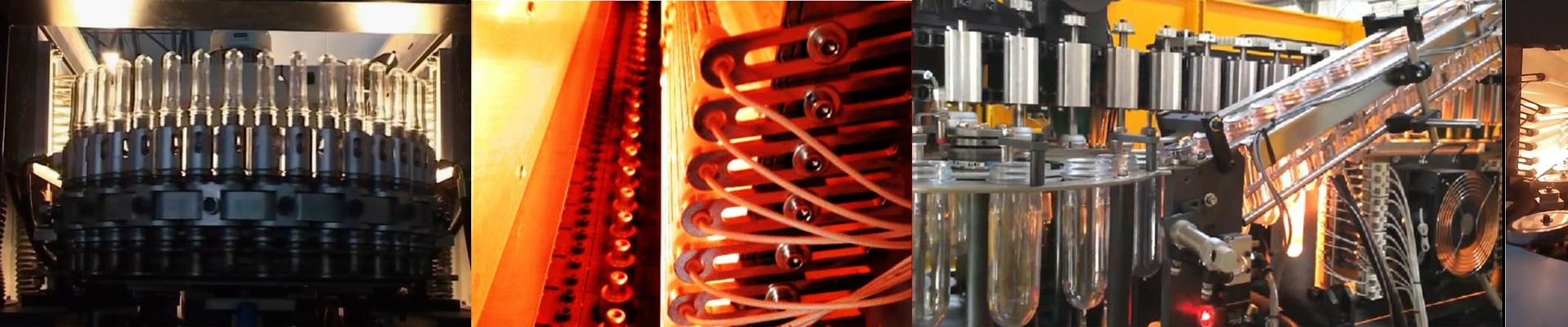
We build industrial quartz infrared lamps for preform heating in stretch blow molding. Short-wave output hits hard and fast, penetrating the PET wall quickly so the preform surface and core close the temperature gap within the tunnel dwell. We match OEM electrical and mechanical interfaces—R7s connectors, 240V/480V options, and exact quartz tube lengths and diameters. Power density is tuned to the heating zone profile: enough punch to recover fast after a jar change, yet stable enough to hold ±1°C control when the line settles in.
Why this plays on real machines
On blow molders—Sidel, Krones, SIPA, Husky, SACMI, Nissei ASB—the heating tunnel is a tight box with strict airflow and reflector geometry. Our lamps drop in as a functional replacement, restoring the original heating curve without re-engineering the reflector or rewiring the zone. The payoff is straightforward: faster thermal recovery after startup, fewer temperature-related rejects, and more consistent bottle weight and wall distribution. Energy use drops because the emitter responds quickly to PID corrections instead of running wide open.
The shop-floor details that make the difference
Infrared heating is line-of-sight. Keep the quartz tube clean and make sure the reflectors stay aligned; otherwise, you’ll see hot spots and cold zones across the preform row. Handle with dry gloves—any oil residue creates hot spots that cut life short. Expect a warm-up period before the spectral output stabilizes. For best results, pair the lamp with the OEM-rated socket and run a temperature profile audit to confirm zone balance before you lock in the run.