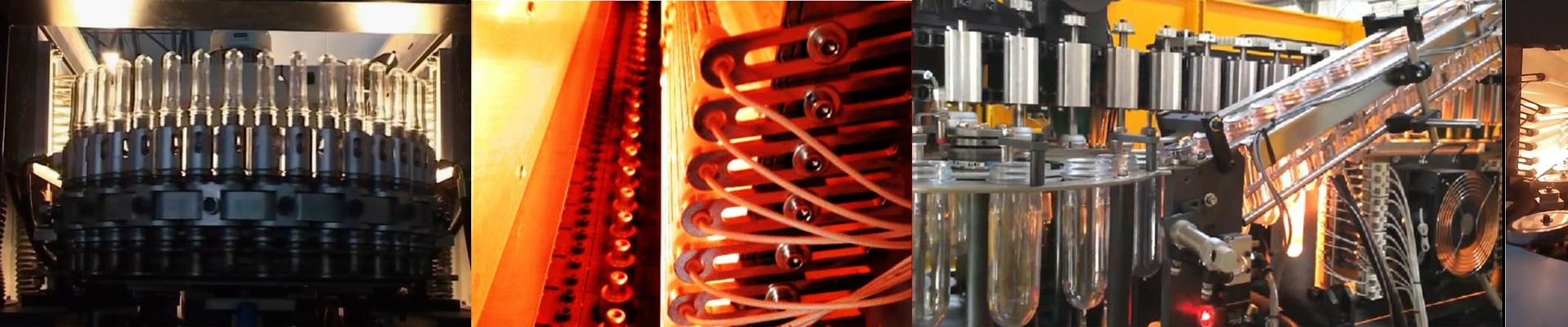
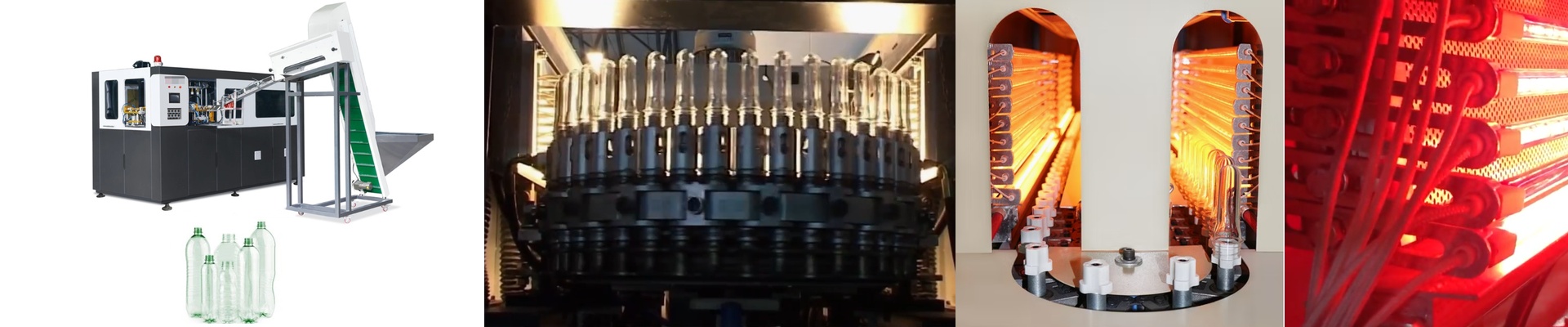

On the blow molding floor, the heating tunnel is where uptime gets decided. When preform temperature starts drifting, you pay for it in PET waste—thick walls, blown seams, or stretch that’s all over the place. You don’t need more heat. You need heat you can count on, zone by zone. That’s what the PC preform heating zone controller brings to the line.
What matters under the hood
We built the controller around short-wave infrared emitters and a closed-loop PID strategy that measures and corrects on the fly. It’s engineered to match the OEM heating-zone architecture on blow molders, with 1:1 parameter compatibility for voltage, power density, and emitter interface. You get stable output in each zone, and the temperature repeatability that keeps the preform wall within your process window. It supports common halogen/infrared lamp fixtures and standard connectors, so you can swap out a zone without tearing the whole tunnel apart.
Why it plays in stretch blow molding
In stretch blow molding, the preform has to land on a tight temperature profile before it hits the mold. With this controller, you cut the swings that give you brittle necks, crystallization, and off-spec bottles. Fewer rejects. Less scrap. More consistent cycle behavior. Plants also see a measurable drop in energy use because the controller avoids overshoot and holds the target without chasing peaks. For you, that means more bottles per hour and less downtime spent hunting down temperature drift.
The practical details
Installation is straightforward, but the tunnel is a rough environment—heat, vibration, and dust. Match the lamp type and wattage to the existing zone spec, and double-check lamp-holder alignment and reflector condition. Expect a short commissioning run to tune the PID for your preform geometry and line speed. Plan on routine lamp inspections and keep spares on the shelf—even the best controller can’t make up for a worn emitter.